
In a startling demonstration, a tech journalist cloned her own voice using an inexpensive AI tool and successfully fooled her bank’s phone system. By feeding an online voice generator a text-to-speech script, she created a deepfake that passed both the Interactive Voice Response (IVR) system and a five-minute call with a live agent. The experiment underscores the growing threat AI voice fraud poses to financial institutions.
Unlike traditional robocalls, AI-generated voices sound natural. They replicate a person’s cadence, tone, and vocal nuances, bypassing many automated voice recognition systems. This guide explores how AI voice fraud exploits conventional call center security and how a multi-layered identity verification strategy can stop it.
Why AI voice fraud is surging in banking
AI voice fraud is rising due to the accessibility of generative AI tools and the abundance of personal information online. With just a few seconds of audio—often from public social media posts or voicemail greetings—fraudsters can generate highly convincing voice clones. Even individuals with minimal technical skills can now create authentic-sounding voices at scale.
For fraud analysts, this creates a worst-case scenario: the usual red flags of a phone scam—odd tone, scripted speech, or stilted responses—may be absent when the voice sounds genuine. Fraudsters often combine voice clones with stolen account details to enhance credibility, defeating traditional knowledge-based authentication checks.
In the Business Insider test, the journalist’s deepfake recited her account and Social Security numbers—data that could easily be purchased on the Dark Web—and the bank’s system treated the call as legitimate.
Even advanced biometric systems, which use voiceprints to authenticate clients, are vulnerable. While these systems detect subtle vocal inconsistencies, AI deepfakes are improving rapidly, narrowing those gaps.
The key takeaway here is that relying on voice authentication alone is insufficient. Protecting against sophisticated fraud requires a layered, identity-centric approach.
How multi-layered identity verification stops complex fraud
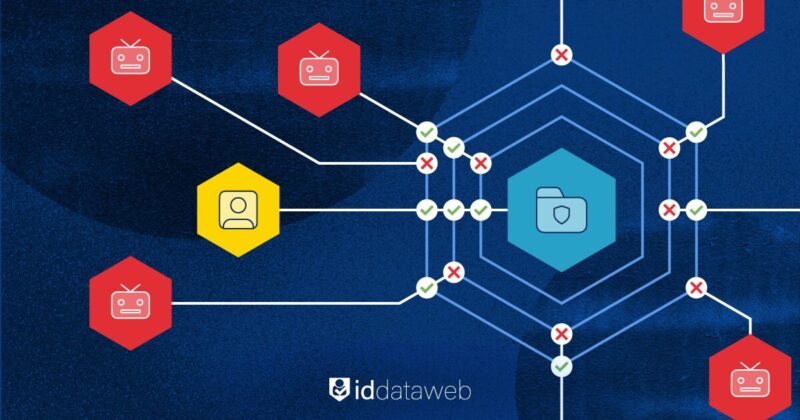
Rather than depending on a single method like a voiceprint or security question, a multi-layered approach combines multiple independent risk signals to verify identity. This includes:
- Something the person is: voice biometrics, behavioral patterns
- Something the person knows: passwords, PINs
- Something the person has or does: device identity, location, call behavior
If one factor is compromised, others provide a safety net.
For example, beyond analyzing voice, a system might check:
- Is the call coming from a known number or a suspicious VoIP line?
- Does the device fingerprint match previous interactions?
- Are the geolocation or IP address consistent with the user’s history?
By integrating telecom, device, behavioral, and network risk signals in real time, identity fraud detection and risk mitigation systems can flag high-risk calls, require additional authentication, or alert security practitioners. Even if an attacker bypasses voice verification, another layer of defense catches them. It’s “defense in depth” for identity—fraudsters must overcome multiple, diverse hurdles simultaneously.
Conclusion
AI voice fraud represents a new evolution of social engineering. Banks and security teams can respond by raising the bar for attackers with a combination of technology and policy:
- Layer voice biometrics with device and behavioral analytics
- Use real-time deepfake detection to flag cloned voices
- Require phishing-resistant multi-factor authentication (MFA) so that voice alone is insufficient
- Train live agents to spot subtle signs of fraud
A multi-layer, identity-centric strategy makes it exponentially harder for impostors to succeed, reducing risk for banks while increasing the effort and cost for attackers.
Is your organization prepared against AI-powered voice attacks? Test your defenses with a personalized demo to see how multi-layered identity verification and voice liveness detection can prevent AI voice fraud before it strikes.